Need furnace repair services in Hamel?
Tell us what your heating or cooling system is doing. Marionaval Heating & Air will connect you with an independent local provider who can talk through next steps.
No obligationRequest a furnace repair estimate
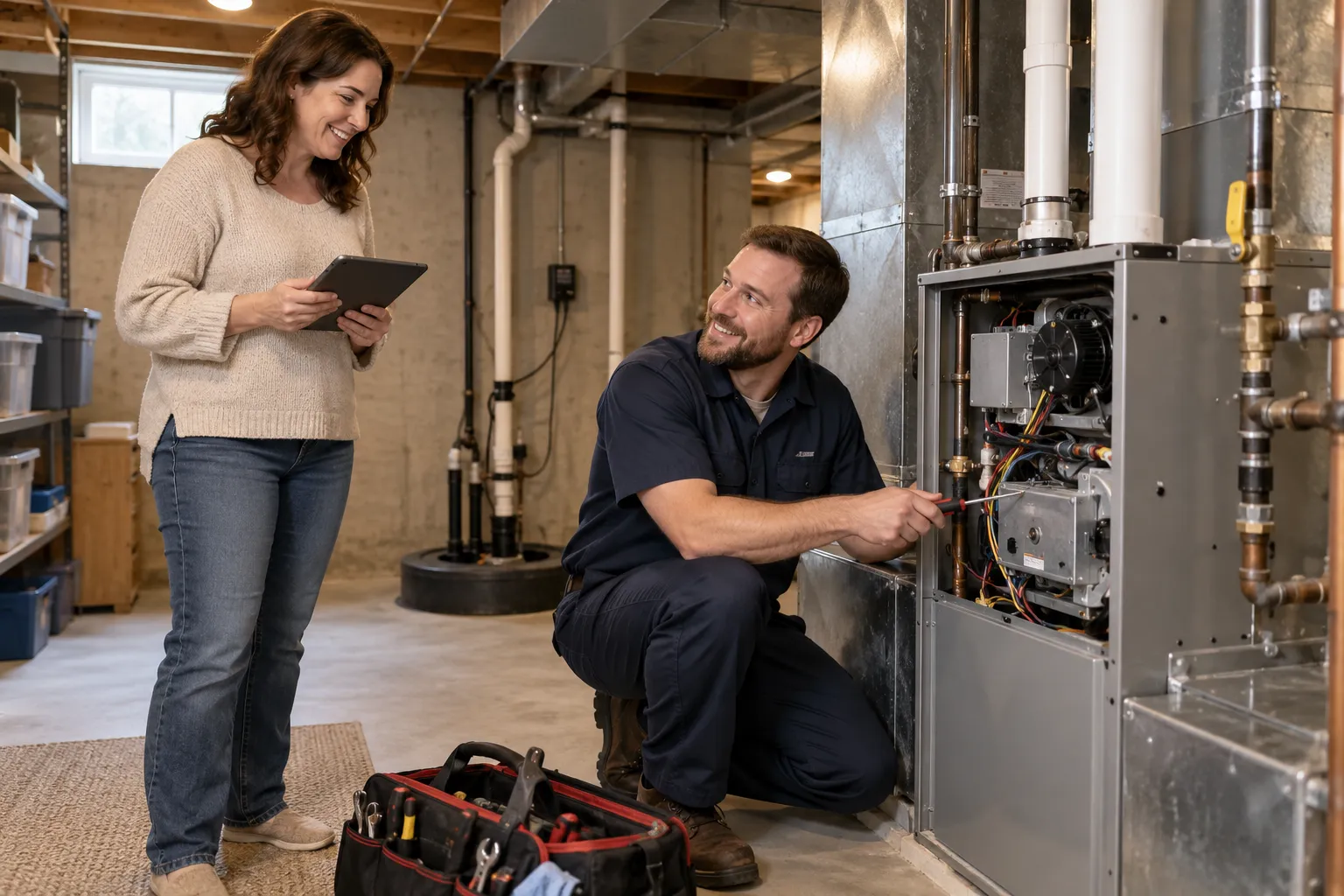
A lot of people think a furnace has to be old to fail. In practice, a clogged filter, a worn igniter or a dirty sensor can shut down a young unit too. When the house goes cold in the Hamel area, you want straight answers fast.
Marionaval Heating & Air is a referral service. We don't do the repairs. We help you sort out the symptoms, gather photos and notes, and connect with independent heating and cooling providers in our network. They diagnose the problem, explain your options and give you a written quote. Ask before you hire, then choose the provider who answers your questions clearly.
A lot of people think a faint gas smell can wait until morning. In practice, it can't. Leave the house and take everyone, pets included. Don't flip switches or use the thermostat on the way out.
Once you're outside, call your gas utility's emergency line or 911. Stay out until you're told it's safe. A furnace provider can inspect the system after the gas company clears the home.
Myth: a loud alarm is just a bad battery. Fact: treat it as real until proven otherwise. Get fresh air, call 911, and keep the furnace off until a professional has checked it.
Myth: no heat always means a pricey part. Fact: many no-heat problems start with something simple. Try these safe steps first:
Then stop. Don't open sealed panels or touch gas parts.
Some signs are loud. Others are easy to ignore. Watch for these:
Noise is a message. A squeal can point to a belt or motor bearing. A bang at startup can mean delayed ignition. Small problems get costly when you run the system through a deep-frost week, so describe the sound to a provider early.
A good visit follows a pattern. The provider asks about symptoms, checks the thermostat and power, then tests the ignition, flame sensor, blower and safety switches. They look at airflow and the filter. They should also check for gas leaks and carbon monoxide near the unit.
You should get a plain explanation of what failed, what it costs and what happens if you wait. Get that in writing.
The usual suspects are an igniter or flame sensor, a thermostat, a blower motor, a draft inducer, a control board and a clogged condensate line. Less often, a cracked heat exchanger turns up. That one is a safety issue, and it often tips the decision toward replacement.
Myth: you only need records for a big claim. Fact: organized records make every estimate faster and clearer. Before the visit, gather:
Some policies may cover sudden damage, so check your policy. Providers can often help document damage for a claim.
Many homes here have furnaces in full basements. After heavy rain or spring flooding, water near the unit is a serious problem. Keep the furnace off, stay out of standing water, and take photos from a dry spot. A provider can tell you what is safe to keep.
Myth: always fix it, or always replace it. Fact: it depends. Repair usually makes sense when the unit is fairly young and the part is modest. Replacement deserves a look when the furnace is many years old, repairs keep stacking up, or the heat exchanger is cracked.
If you're searching furnace replacement near me, ask the provider to show repair and replacement side by side, in writing.
The questions matter more than the sales pitch. Try these:
A good answer is specific. "The flame sensor is dirty, here is the part price, here is the labor" beats "it's probably the board." Good providers explain, show you the failed part, and don't rush you.
Many HVAC service providers handle both furnaces and air conditioners. If your system has trouble in both seasons, mention it, and ask about Emergency AC repair availability in summer. Availability varies, so ask each provider directly.
Use a safe space heater only as directed, never a gas oven. Open cabinet doors on exterior walls to protect pipes in a deep freeze. Keep everyone out of any room where the CO alarm sounded.
Pull together your notes, photos and questions. Then Marionaval Heating & Air can connect you with independent providers in our network. Request a callback to check provider availability, or use the request form to ask for an estimate.
The provider tests ignition, sensors, blower and safety switches to find the real cause, not just the symptom.
Gas, venting and carbon monoxide checks around the furnace before it runs again.
Worn igniters, sensors, motors and boards swapped for the right fit.
A clear breakdown of parts, labor and options, so you can decide without pressure or guesswork.
Furnace repair prices vary by part, brand, fuel type and the time of year. These typical U.S. ranges are a starting point only. Always get a written quote before work begins.
| Repair item | Typical range | Notes |
|---|---|---|
| Diagnostic visit | $75 – $200 | Often applied toward the repair if you proceed |
| Igniter or flame sensor | $100 – $350 | Common and often quick to fix |
| Thermostat replacement | $100 – $400 | Smart models cost more |
| Draft inducer motor | $300 – $800 | Needed for safe venting |
| Blower motor | $450 – $1,500 | Variable-speed units cost more |
| Control board | $300 – $900 | Depends on brand and model |
Smell gas or hear a CO alarm? Leave the home and call emergency services.
Snap the model label, note the symptoms, and jot down the date it started.
Tell Marionaval Heating & Air what is happening and we will connect you with a provider.
Check the questions, review the written quote, then pick the provider you trust.
Myths get busted up front, so you know what is normal and what needs a professional.
A short list of what to ask a provider before you agree.
Photos and notes make estimates quicker and clearer.
You choose the provider, and they do the work.
Tell us what your heating or cooling system is doing. Marionaval Heating & Air will connect you with an independent local provider who can talk through next steps.
No obligationCommon causes include a dirty flame sensor, a clogged filter, a tripped limit switch or a thermostat set to fan only. Try the quick checks first. If cold air continues, a provider can diagnose it.
It depends on age, repair cost and safety. A cracked heat exchanger or repeated breakdowns often point to replacement. Ask for repair and replacement quotes in writing.
Have the model label photo, symptom notes, thermostat settings, filter dates and any past repair receipts. Clear records help a provider diagnose faster and give you a more accurate quote.
Tell us what your heating or cooling system is doing. Marionaval Heating & Air will connect you with an independent local provider who can talk through next steps.
No obligation